
Home Blog Page 12

How to Develop your Emotional Dysregulation to help your ADHD?

0

How to develop your Emotional Dysregulation to and help your ADHD?

Do you generally know how someone else feels about each other when you’re in a group? Do you comprehend why you’re upset? Do you find feel uncomfortable in stressful situations?

Emotional dysregulation is a common symptom of attention deficit hyperactivity disorder (ADHD), which means that people who suffer from ADHD often struggle to regulate their emotions. This can lead to problems such as anxiety, depression, anger, impulsivity, and poor self-control.

Emotional dysregulation is a common symptom of attention deficit hyperactivity disorder (ADHD), which affects about 5% of children and adolescents. It refers to the inability to regulate emotions, such as being easily overwhelmed by negative feelings like anger or sadness, or having difficulty controlling impulsive behaviors.

Emotional dysregulation is one of the core symptoms of attention deficit hyperactivity disorder (ADHD), which affects about 5% of children and adolescents. It means being unable to regulate emotions, such as having difficulty controlling anger, sadness, fear, anxiety, worry, guilt, shame, embarrassment, frustration, disappointment, jealousy, envy, loneliness, boredom, and so forth.

Our answers to these and other queries can help to determine our Emotional Intelligence or EQ.

Understanding and managing our emotions, as well as recognizing and reacting accordingly to the emotional responses of others, is an important skill that affects our ability to function in life, sustain connections, and have successful interactions.

Ways to develop your Emotional Intelligence:

Observing Emotions:

We must be able to precisely recognise emotions, seek hints in facial expressions and body language, and listen for verbal commands to fully understand them. To assist your children:

Lookout books or games that show various facial expressions. “What attitude does this image depict?” you might ask. “How do you think this person feels?” or “How do you believe this person feels?”

Draw more attention to emotions in colleagues, relatives, yourself, and your kid. Take full advantage of the teaching moment. “I could tell Jessica was sad today.” “Did you happen to notice how she sat quietly all afternoon, playing by herself?”

Explain how you’re thinking. When your children notice your emotions, especially sadness, resist your desire to respond, “I’m fine.” Instead, say something such as, “Yes, I’m unhappy.” Thanks for taking the time to realize.” “But everything would be alright,” you might say if they seem worried. Sadness is a natural aspect of existence.”

Understanding Emotions:

What is the true source of a person’s feelings? That is a difficult question to answer. While you’re waiting in the queue or dining at a cafe, make up a story about strangers — just make sure you’re out of hearing! Discuss their fictitious situation and how you believe they are feeling. “They’re on their vacation, and she’s angry since she just found out he falls asleep,” for example.

Help your kids examine alternative viewpoints when they take other people reacting personally. “

Emotional Intelligence in ADHD:

Regardless of these difficulties, both with and without ADHD can enhance their emotional intelligence. Here’s everything you need to know about it.

Focus heavily on prevention:

Preventative methods aid in this by building resilience to powerful emotions. Preventing an emotion from becoming overwhelming is the best approach to moderate a strong emotion. The areas listed below will aid in the prevention of strong emotional responses:

Take care of physical ailments:

We are more sensitive to heightened emotional instability as a result of common ailments (e.g., colds, flu). Therapy for these conditions must be handled right. If you’re not feeling well, take your medicine and vitamin supplement as directed, and schedule an appointment with the doctor.

Eat a healthy diet:

Your body’s power to control itself will increase if you eat regularly and with an emphasis on nutrition. Eating every several hours will help you keep stable blood glucose and power level. You should focus on eating a very well dinner with a range of foods.

Make a self-assessment:

Take our emotional intelligence testing to determine out more. What are some of your flaws? Are you willing to acknowledge that you’re not flawless and that there are some areas where you could grow to become a good human? Have the courage to take a hard look at yourself – it could save your life.

Examine your coping skills in stressful situations:

 Do you get irritated every moment there’s a wait maybe something doesn’t go as scheduled? Do you ever criticize or become angry at others, even if it isn’t their fault? The ability to remain cool and in control of tense events is highly regarded both in and outside of the workplace. When things go awry, keep your emotions under control.

Take control of your mind:

Current neuroscience experts suggest new ways for people with ADHD to seize command of their highly adventurous brains and also be far more productive daily. Less anxiety and more energy can result in a happy, more successful you in the short term. Long-term effects can include a significant boost in self-esteem. You might think about taking these steps:

  • Determine the cause of tension that is impacting your feelings and ability to function
  • Identify which category that stressor belongs to
  • Take part in a straining activity that you enjoy
  • Develop techniques to restore the energy that has been lost by the unpleasant activity

ADHD sufferers have a neurodiverse brain. They are prone to experiencing emotions with a great level of arousal. You can manage the stress that affects various aspects of life by learning how your brain works and devising an innovative plan. “Why” can be changed.

References and Citations:
https://www.mindtools.com/pages/article/newCDV_59.htm
https://files.eric.ed.gov/fulltext/EJ1126303.pdf

Assessment is the Key to Improvement; How Assessment (Self-Assessment) Helps in ADHD?

Assessment is the key to improvement; How assessment (Self-Assessment) helps in ADHD?

A variation in brain activity impacts a child with ADHD’s ability to focus, among many other things. Millions of kids are affected, and if remaining unattended, it can lead to maturity. ADHD Self-Assessment Tests are helpful to see if you suffer from the behavioral symptoms of ADHD. As ADHD manifests itself in a variety of ways in both children and adults, a quick ADHD self-test might help you figure out how much you or a close one suffers from symptoms of Attention Deficit Disorder.

Assessment of Attention Deficit Hyperactivity Disorder: Current Tools and Their Limitations

ADHD assessments are carried out by a range of experts, including but not limited to:

  • Psychologists who specialize in clinical psychology
  • Psychologists who work in schools
  • Neuropsychologists
  • Psychiatrists
  • Neuropsychologists
  • Pharmacists and neurological doctors are two types of pediatrics.
  • Internists and family doctors are two types of doctors

What Types of ADHD Self-Assessment Tools can be used?

There is a variety of ADHD assessment scale which can be used to help identify and track therapy progress. Teachers and parents can be given the Weaknesses and Strengths of ADHD Signs and Normal Behaviour Evaluation Forms for their assessments of the kid. This is freely available online and has been confirmed in Chinese. The ADHD rating system (ADHD-RS) and Cashiers’ scale score are two more testing methods. These assessment methods, on either hand, may not be freely available online and can assess other elements of a children’s actions, such as the presence of other diseases. The Adult ADHD Identity Scale (ASRS) is an effective assessment method for adults.

Assessment of ADHD Using Evidence: False Positives and False Negatives

Using a scientific proof assessment that includes compliance to the DSM-5 clinical guidelines as well as the inclusion of multi-informant/multimethod methods, irrespective of the healthcare expert tasked with diagnostics possible ADHD, is a very well and arguably gold usual method. To guide and increase confidence with medical impressions, such tools should incorporate empirically validated studies and, when feasible, test data about key clinical groups.

An overarching goal of all evaluation measures is to improve the instrument’s sensitivity and specificity. The capability of a test, such as a rating system, to accurately identify people with the disease is referred to as sensitivities, whereas the capacity of a test to correctly identify anyone without the disease is known as precision. These statistics are particularly worrisome in the case of ADHD, given the long effects.

Diagnostic assessments that are incorrect have real-world consequences. A negative test may obstruct correct care (e.g., academic/occupational).

What is Self-Assessment and how it helps in ADHD?

Besides, these complex and long questionnaire sessions by professionals, to evaluate your ADHD state, there also come some self-assessment tools by various expert and qualified ADHD professionals. These self-assessment tools help provide you with the important information and the relevant evaluation of your condition, and what is more, you can once buy and use it feasibly all by yourself. The benefits include, 

  • Self-assessment can assist reveal gaps in pupils’ learning and provide understanding into their genuine grasp.
  • Empowering learners to reflect on their training and levels of knowledge can be a useful ‘actually woke call,’ highlighting areas where they need to develop.
  • Learners must analyze new information in the context of their prior experiences when commenting on what they have learned.

Self-assessment tools provide a way to obtain information about yourself so that you can quickly choose a profession that meets these criteria.

The following are important aspects of self-assessment tests:

  • • Your values are the things that are most essential to you.
  • • What you like doing the most are your interests.
  • • Personality refers to your unique characteristics, interests, emotions, and goals.
  • • Aptitude – Actions that you specialize in, whether you were born with them or learned them.

Assessment Tools by ADHD Coaching (Australia):

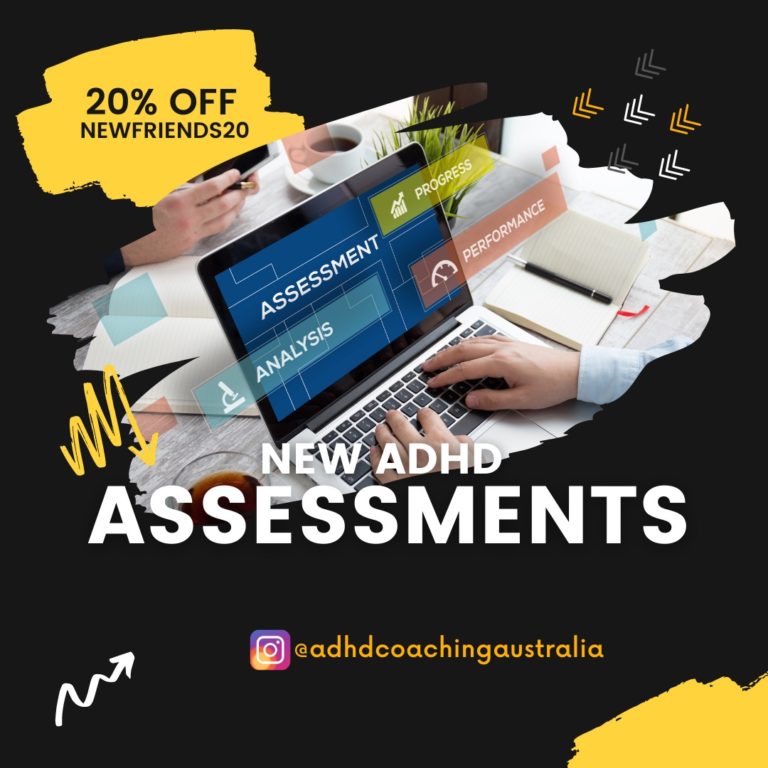
ADHD coaching Australia aims to create a safe non-judgmental environment that supports you in the process of self-exploration, as well as fosters self-efficacy, self-belief, commitment, and personal accountability. With the help of qualified and experienced, they have created assessment tools for all users. These have been shown to enrich groups or individuals with the company’s fantastic web-based tools and coaching resources. 

The Qualitative ADHD assessment tool is one of the best combinations of favorable and non-favorable adult ratios. (Carried out a meta of observational studies, the Strength of Recommendation.) In elementary school-aged children, the Nashville ADHD Diagnostic Educator and Parental Evaluations show moderate specificity and sensitivity. If you want to have a try, the assessment tools’ cost varies from $249 to $349 for different features. Besides, there is also a kids’ discount package at $149 only. You can visit the respective website (https://adhd-oldsite.whitelabelseopartner.com/assessments/) for more details and buying.

References and Citations:

https://www.centerforadd-az.com/add-adhd-self-assessment
https://www.vumc.org/health-wellness/news-resource-articles/attention-deficit-disorder-adhd-or-add-self-assessment
https://www.researchgate.net/publication/7650814_Accuracy_of_Self-Evaluation_in_Adults_with_ADHD
https://www.otandp.com/knowledge-base/what-self-assessment-tools-can-be-used-for-adhd

Is There Any Overlap Between ASD/ADHD?

0

Is there any overlap between ASD and ADHD? Their relationship?

ADHD and ASD frequently co-occur. However, very little is known about the neurological underpinnings of the overlaps and differences across these diseases, especially in young adults – a vital period for brain development across executive and psychological domains. 

ADHD and ASD were studied in young adult samples (mean ages 16–26) utilizing executive functions and electroencephalography (EEG), the most commonly accessible neuroscience technique. The bulk of research concentrated on event-related prospects (ERPs), with others exploring oscillatory methods. Four neurocognitive areas showed overlap and distinct characteristics for ASD and ADHD: attention processing, performance analysis, face handling, and visual processing.

https://www.ncbi.nlm.nih.gov/pmc/articles/PMC6331660/#:~:text=These%20two%20disorders%20frequently%20co,et%20al.%2C%202012

ASD versus ADHD

ADHD is a prevalent neurological disease that affects a lot of kids. Between the ages of 2 and 17, 9.4% of children in the United States suffer with ADHD.

ADHD is divided into three types:

hyperactive-impulsive personality type

A combination that is mostly inattentive

The most frequent variety of ADHD is the mixed type, which includes both inattentive and overactive symptoms.

The typical age of diagnosis is seven years old, and males are far more likely than females to be medicated, however, this might be due to how it manifests.

Another childhood illness, ASD spectrum disorder, is affecting a growing amount of youngsters.

The term  ASD refers to a collection of disorders. Cognition, growth, and communication are all affected by these conditions. Males are four and a half considerably more probable than girls to be diagnosed with ASD.

When do they occur together?

There may be a factor why signs of ADHD and ASD are hard to identify from one another when they occur simultaneously. Both of these things can happen around the same moment.

Not all kids can be accurately diagnosed. Only one of the diseases may be to blame for your child’s issues, according to a specialist. Children might have both diseases in some situations.

As per the Centers for Disease and Protection, 14% of children with ADHD also have autism spectrum disorder (ASD). Kids with both disorders experienced more debilitating complaints than children without ASD features, as per 2013 research.

In other terms, kids with ADHD and ASD signs were more likely than other children with only one of the conditions to have learning disabilities and poor social skills.

Understanding the combination

Doctors were hesitant for a long time to label a child with both ADHD and ASD. As a result, only a few medical studies have examined the impact of the combined disorders on children and adults.

For years, the American Psychological Association has maintained that the two disorders cannot be diagnosed in almost the same person. The American Psychological Association (APA) altered its mind about the term “reliable source” in 2013. The (APA) has stated that the two conditions can co-occur in the Pharmacological and Manual Of mental Disorders.

In a review of studies on the founder of ADHD and ASD published in 2014, scientists found that 30 to 50 percent of people with ASD also exhibit ADHD symptoms. Scientists aren’t exactly what causes either condition or why they happen so frequently together.

Genetics may have a role in both diseases. An uncommon gene was identified in one investigation.

https://www.healthline.com/health/adhd/autism-and-adhd

How Are ADHD and Autism Diagnosed?

Bertin recommends collaborating with a physician who is knowledgeable about both disorders to get an accurate and complete diagnosis. “The goal of a thorough examination is to identify a child’s qualities and weaknesses,” he says. “Different testing measures attempt to record ADHD problems, brain control, social interaction and communication impairments, stress, mood disturbances, and a variety of other symptoms using a variety of methods.”

However, examinations alone are insufficient. “Trying to get to know a kid and seeking a comprehensive picture of their existence in the real world, a worldwide sense of a future learning and verbal abilities, as well as their play and daily living skills, remains a professional competence for both ADHD and autism evaluation.”

“When Clark was 2, we observed autism-like characteristics like running in loops to the left while twiddling his left hand,” Hutchinson adds. “We first noticed ADHD signs once he began school. He had a difficult time keeping focused.” Clark was diagnosed with ADHD in fourth grade, followed by Aspergers (no longer a separate diagnosis) a year and a half later.

Although it can be stressful for parents to not know what is causing their child’s problems, there’s not always a proper answer. “There are times when, in the short term, we need to put aside the diagnosis argument and concentrate instead on a strategy to fix anything wrong with the kid,” Feeling of inner adds. 

Could CBD oil play a part in ADHD symptoms relief?

CBD oil, which is extracted from the cannabis Sativa plant and contains the CBD cannabinoid, is commonly used to treat a variety of mental and physical illnesses.

CBD is frequently the topic of in-depth investigation due to its flexibility. While CBD oil looks promising in alleviating several of the symptoms of ADHD, additional research is needed to see if it may be a viable therapeutic option.

CBD oil and ADHD symptoms

CBD oil isn’t a cure for ADHD, but it can assist with a few of the symptoms that many individuals suffer with.Anxiety is a problem for many people with ADHD, and it can exacerbate their symptoms. CBD oil seems to aid with anxiety symptoms, according to some data.

Researchers’ statements that CBD can aid youngsters with anxiety and depression issues were backed up by Research Published. This impact may need to be investigated further in a high proportion.

Research from 2013 looked into the link between ADHD symptoms and cannabis use. Persons with hyperactive and impulsive subtypes of ADHD were more probable to utilize cannabis daily to control their symptoms than people with indifferent subcategories of ADHD.

However, the actual source of this perceived symptom alleviation is unknown. Furthermore, instead of concentrating on just one type of cannabis, this research looked at the complete plant.

https://www.medicalnewstoday.com/articles/325599

Can CBD assist in the treatment of ADHD symptoms?

While CBD has a long way to go before it can be considered a viable ADHD medication option, it may help alleviate some of the symptoms associated with the disorder.

ADHD is characterized by low focus, difficulty concentrating, and short memories. Many ADHD patients also experience high levels of anxiety and depression. CBD works with the key nervous system to improve mental clarity and focus abilities at work or school.

CBD oil, for instance, can assist with depression and fear. Anxiety and strain cause us to lose energy and confidence exhausted, which contributes to bad attention and concentration.

How CBD oil helps people with ADHD?

CBD works in the body in a variety of ways. The function of the endocannabinoids in affecting brain responses such as emotion, cognition, and discomfort has been repeatedly emphasized in studies. CBD as well as other cannabis engages with ECS sensors across the brain and nervous system to modulate a variety of physiological processes, including energy states, excitability, and attention.

Serotonin synapses may be influenced by CBD. CBD has been found in animal studies to be effective in simultaneously triggering numerous dopamine reuptake types in the brain, allowing for larger levels of the “happy hormone” serotonin to be released.

https://www.verywellmind.com/cbd-oil-for-adhd-research-uses-side-effects-5081636

CBD has the potential to Reduce ADHD Symptoms

Adults with ADHD medicated with the cannabis medicine Sativex (which contains THC and CBD) demonstrated a slight improvement in ADHD symptoms with no cognitive impairments, according to a small randomized clinical study released in 2017.

It’s significant to mention, however, that these improvements were slight and insufficient to show that cannabinoids were significantly more effective than a placebo.

Adults who used larger amounts of medicinal cannabis used less ADHD medication, according to a study conducted in 2020.CBD products with a greater CBD concentration were linked to reduced ADHD ratings.

Is CBD a legal product? Is it secure?

So far, 33 states and territories of Columbia have approved laws making weed legal in a certain form; ten additional states and Metropolitan, D.C. have enacted bills making marijuana legal for adult use. Despite the fact, the United States Drug Enforcement Administration classified CBD, along with all other cannabinoids, as a controlled substance drug, making it as illicit as heroin and cocaine. Despite this, one cannabis industry analyst estimates that by 2021, Cannabinoids alone would be worth nearly $3 billion.

How to use it?

CBD oil may be found in a variety of types. The oil is sold separately in certain pharmacies and on the web. Cannabidiol foods and snacks may also be created by producers. If you don’t like the taste or texture of the oil, you can take it in capsule form instead. CBD oil can be vaped by those who currently smoke or vaporizer.

Because there are currently no standards for appropriate CBD doses, a person must always seek to take the smallest dose feasible to address their problems. Some CBD oil manufacturers provide their dose recommendations, but anybody unsure should consult a doctor while using the item.

Adults may take dosages of up to 1,500 mg each day. In children, however, the permissible dosage will be substantially lower.

How the “7 day rule of not spending” could reduce your impulse buying?

Impulse purchases may be entertaining—at least in the short term. You go into Target looking for underwear, and before you know it… Chip and Joanna’s gorgeous pillow covers are all over your cart.

Every month, the americans Spend $183 on impulse.1 That’s around $6 each day, which isn’t too bad, right? However, that sums up to an additional $2,196 spent per year.

If you deposited $183 down every month for ten years and earned an 11 percent return, you’d have more than $39,000! Nothing beats interest charges for putting things in perspective.

https://www.ramseysolutions.com/budgeting/stop-impulse-buys

Why is impulse spending so bad?

When you make a hasty buy, you risk jeopardising your savings and financial future. To begin with, paying your account using a credit card may make it increasingly challenging to wipe off your invoice at the end of the month. Sure, anyone can opt to pay simply the minimal amount due, but you’ll be charged fees. You could get yourself in debt if you’re not careful.

Worse, if you worry about paying your credit card bill, you’ll be charged fees and perhaps a penalty rate of interest. And that’s only the short-term consequences. In the long run, you’ll hurt your credit score, which will limit your lending options in the future. That is why we are here to assist you in avoiding impulsive purchases at all costs.

How to reduce your  Impulse of  Buying

Here are a few ideas to help you avoid the desire to take something you don’t require!

1. Refrain from yielding to temptation

What’s the greatest technique to avoid making a quick purchase? Rarely shop at stores that sell items you want to purchase! Especially ones that allow you to “purchase now, pay later”! This may involve avoiding shopping centres or restricting access to your preferred shopping websites. You’re going to be drawn to new shiny items if you’re continuously confronted by them. Don’t give in to the temptation, and you’ll know you’re just buying what you absolutely need.

2. Take a moment to think about it

Before you go out and buy anything, consider why you’d need it.

Because they are afraid of losing out on a discount or a good price, up to 53.8 percent of women make impulsive buying. Worse, 36.4 percent of women claimed they purchased something on impulse because they didn’t have enough money.

3. Make a budget and stick to it

One of your key priorities should be costing. There are numerous financial possibilities to think about.Whatever plan you choose, you’ll most certainly divide your funds into a savings account, a debt finance, an essential necessities fund, and a life objectives help finance. Then, if you have sufficient money left over, you can create a personal expenditure category. This manner, you can limit your unplanned buying to the amount you cast aside for this category.

4. Consider your reasons for making an impulse purchase

Impulse purchase is a means for an individual to seem attractive to others. You may be anxious about how others view you. Having new stuff can sometimes improve your appearance.

Others may conduct spontaneous buys as a result of being overly emotional. You may have difficulty controlling your feelings or be concerned about a certain issue. An impulsive buying is a purchase made just on rare occasion.

If any of these relate to you, you should tackle the cause of the problem instead of patching it up with a new purchase. Before trying to pull out your credit or debit card, take some deep breaths and consider your motivations.

5. Keep your cash and credit cards to a minimum

If you’re going out, only take cash with you so you do not even end up with credit card debt on the spur of the moment. On a given transaction, credit card users spend up to 83 percent more than money users. If you have a problem with online buying, you may wish to put your debit cards on hold. You can do this by calling the number that issued your credit card.

6. Avoid using social media.

Nowadays, connecting with friends on facebook is more about sponsored content and affecting than it is about connecting with friends. Even if you only use it to check in on your loved ones, you’ll be exposed to a lot of information.

Those ads are also powerful. According to statistics, 55% of consumers have purchased products through a social media outlet. To avoid to become a statistic, your best strategy is to stay away from social media entirely.

https://www.clevergirlfinance.com/blog/impulse-purchase/

Which Careers Play a Part In Being Successful with ADHD?

0

Career success is sometimes perceived as a far-off, unachievable ideal, particularly for those with ADHD, whose illnesses can make it difficult to manage job obligations. However, a new ADDitude study exceeded our predictions, with almost all of our users reporting high work satisfaction not because of their ADHD, but because of it.

https://www.healthline.com/health/adhd/best-jobs

Because you have adult ADHD, your weaknesses and strengths may vary somewhat from others. It may be more difficult for you to remain focused and disciplined, as well as accomplish activities on time. You may have challenges at work as a result of this.

However, many occupations may be best adapted to your ADHD. The goal is to choose a career that allows you to put your abilities to the greatest possible use while also still ensuring that your problems are manageable. As you consider your future career options, keep the following points in mind:

Choose something that you enjoy

Everyone performs better in a work that piques their attention and motivates them. This is particularly true if you have attention deficit disorder. It will be more difficult for you to stay consistent at work if you are quickly bored and annoyed.

Make three lists before deciding on a career: what you’re excellent at, what you enjoy doing, and what somebody will pay you to perform. All three of these criteria should be met in your dream work.

Concentrate on your strengths

Symptoms of ADHD vary from person to person. You may get agitated and sidetracked as a result of the problem. It can also make you so concentrated on a subject that you find it hard to shift your attention to anything else.

Maybe hire an adhd coach in the meantime to get you there?

https://www.webmd.com/add-adhd/best-jobs-adults

Career that are best for people with ADHD

Many individuals with ADHD do well as entrepreneurs, computer programmers, and creative sectors, according to Roberts, because of their unique capacity to solve issues and establish systems when they are engaged in their job.

People with ADHD would also be great in the following jobs:

Representative of the company

Owner of a small business

Worker in the hospitality industry

Cook Aid courses

Technician for computers

Writer or painter

Engineer/Athlete

You can work in any career you desire, although people with ADHD generally gain from flexible or non-traditional schedules. They also have a cool demeanor under stress and thrive in quickly areas like schools, clinics, and restaurants.

https://www.verywellmind.com/the-best-jobs-for-people-with-adhd-5201906

How to Keep Yourself Motivated?

According to recent research on ADHD in the workplace, between 55 percent and 69 percent of people with ADHD have trouble getting work done efficiently and to their fullest capacity. According to the same study, between 20% and 23% of people with ADHD had trouble getting fired from their respective jobs and had issues with attendance. 

No matter what career you get, you’ll have to manage certain cognitive issues:

Even though you tried your best to listen intently, you may forget important details from a conversation.

Reading emails might be exhausting at times.

It may seem that completing essential chores is unattainable.

Even if you set an early set, you may be constantly late.

Even if you work more hours than your coworkers, you may feel unproductive.

You are not a lousy employee because of any of these factors. These are only difficulties.

Why Do There Seem to Be So Many Successful ADHD People?

As a result of their brain functioning abnormalities, persons with ADHD are known to have distinct abilities. They are more spontaneous, innovative, and original. They are also more creative, vibrant, intuitive, and straightforward. They also have a significantly stronger ability than their non-ADHD counterparts to hyperfocus on issues that fascinate them.

They come up with new ideas and frequently come up with the most original and creative ideas, and their high energy allows them to accomplish more and work even harder and better than others. Distractibility and spontaneity are strongly linked, and many individuals with ADHD are successful at redirecting hyperactivity and transforming it into unpredictability, which may be used to serve them in all aspects of life.

People with ADHD should engage in occupations that allow them to channel their demand for physical activity, creativity, inspiration, or inventiveness into something productive.

THE PERFECT JOB FOR ADULTS WITH ADHD

When it comes to selecting the perfect career and environment, you’ll need to spend a little time thinking about your preferences and needs. This will entail taking into consideration both your ADHD strengths and challenges. o obviously, there will be a need to explore further than this.

Isn’t it true that you’re more than your ADHD?

And there isn’t a study that can tell you precisely what you want and need in a career.

One thing to watch within your work environment is RSD or rejection sensitive dysphoria!

Natural Remedies For ADHD

In recent decades, the manufacturing of medications to treat attention deficit hyperactivity disorder has soared. According to the Centers for Disease and Prevention (CDC), ADHD symptoms in youngsters increased by 41% between 2003 and 2011Trusted Reference.

According to estimates from 2011, 11percent of total of children between the ages of Four and 17 have been evaluated and results.. That’s a total of 6.4 million kids. There are alternative, more natural choices if you don’t want to treat this illness with medicines.

Side effects from medications are possible

By boosting and stabilizing neurotransmitters, ADHD medications can assist to alleviate symptoms. Neurotransmitters are hormones that send signals from your brain to your body’s cells.ADHD can be addressed with a number of medications, including amphetamine and stimulants . 

Non stimulants, such as fluoxetine (Strattera) or Wellbutrin, can be utilized if stimulant side effects are more to bear or if other medical issues make amphetamine use impossible.

While these medications can help with focus, they also have the potential to induce major negative effects. 

Sleep disturbances 

fluctuations in mood

a decrease in appetite

issues with the heart

suicidal ideation or behavior

There wasn’t too much investigation on these medications’ long-term effects.However, some research has been conducted, and the results raise red flags. In a 2010 Australian investigation, no significant differences were discovered.

https://www.healthline.com/health/adhd/natural-remedieshttps://www.healthline.com/health/adhd/natural-remedies

Natural Remedies?

A brain ailment called attention deficit hyperactivity disorder affects over 15 million American adults. Some natural therapies may help to alleviate some problems. Others have a little impact.

Cognitive Behavioral Therapy 

You can consult with a therapist or a trainer to figure out which tactics are most effective for you. They may would like you to:

Make a schedule

Learn how to stay organized

Distractions must be managed

Limit your options

Make a list of your objectives

Create favorable conditions

Diet Planning

When it comes to ADHD, a well-balanced diet is crucial. Using fresh, healthful foods low in fat, cholesterol, and salts can help you control your problems. You know precisely what’s on your plate when you prepare at home.

Exercise

Not only is exercising excellent for your wellness, but it’s also healthy for your intellect.One research found that doing 45 minutes of high – intensity exercise three to four times a week for ten weeks lowered ADHD symptoms considerably. Check with your doctor before you begin. 

Caffeine should be avoided

Caffeine might be a helpful ADHD therapy. According to studies, it increases cognition and focus. You’re undoubtedly aware that it can be found in coffee, drink, and tea. It’s also included in career maturity pain relievers and cold treatments. Remember that a little caffeine may go a far toward. Caffeine in excess might have the opposite result.

Vitamins and supplements

Supplementing with omega-3 fats is beneficial to your heart. However, the advantages for your Symptom severity are minor. Copper, ferrous, serotonin, and magnesium are all in this category. Unless you’re already deficient in those nutrients.

https://www.webmd.com/add-adhd/ss/slideshow-adhd-natural-remedies

Essential Oils:

Essential oils, according to some, can help relieve or minimize the symptoms of ADHD.

Lavender: Lavender can help individuals sleep. Although individuals claim that it helps, there appear to be few further facts to support this up.

Vetiver: The findings have been made public.

 Rats were able to focus better after inhaling vetiver essential oil. To determine if the same remains true in people, more research is required.

Rosemary: Those who were exposed to the scent of rosemary extract got improved results for speed and precision in cognitive tasks.

https://www.medicalnewstoday.com/articles/315239

Iron,Minerals, Vitamin C, and B6 

Several ADHD minerals and vitamins are essential for the production and maintenance of neurotransmitter synapses in the brain, particularly when a kid or adult is low under one of them. Iron and vitamin B6 enhance levels of dopamine, whereas vitamin C is a key component of neurotransmitters. Zinc modulates dopamine and, when combined with other medications and therapies, may benefit certain children with ADHD symptoms.

Only 18 % of the therapeutic community had ADHD, compared to 84 percent of the ADHD group. Low iron levels – as well as low metal concentrations — are linked to serious ADHD, but patients should not start taking supplements without first consulting with their doctor.

Green Time 

Green time is particularly useful in assisting children in recovering from concentration fatigue, which can occur after a full school day. Green time can be incorporated into the day through gardening, riding to school, or walking the dog in the park.

Constructive guide to deconstruct ADHD self-limiting beliefs & imposter syndrome.

You have no bigger enemy of you than you, yourself. Yes, that can be true if you let your self-sabotaging thoughts take control over you. But, don’t worry. I am here to help. As a professional coach, I have helped people uncover their true potential by breaking unhealthy patterns caused by self-limiting beliefs.

Self-limiting beliefs are unproductive thoughts that impede your progress towards important life goals. It is when someone inspires you to participate in a competition and you want to but your mind tells you not to do so. Thus you let your ‘I am not capable enough’ thought rule. Or, it is when you find an opportunity to apply for a higher position in another organization which you simply pass, saying ‘what if it didn’t turn out well for me’ or ‘what if I lost my comfortable position in my company.’ It is those â€˜what ifs’ that numb your creativity. So, you unintentionally let them win over your constructive thoughts which, ultimately, change your entire reality.

When you create false assumptions about yourself, you not only break your confidence but also miss great chances for growth which you would have availed otherwise. You create an illusion in your mind that great things are not meant for you so you excuse your inaction by saying ‘I am not ready yet’, etc. Your low self-esteem causes you to undermine your potential and makes you think small about yourself. Thus, you become your enemy because you hinder our progress due to your self-destructing thoughts.

If you are worried about the inner voice that asks you to stop taking risks, getting in trouble, and trying new things then you are at the right place. Be ready to squish and shatter those beliefs that are hindering your progress.

Paradigm shift – Change your thoughts to change results

The first and foremost step in a paradigm shift is to find, accept, and track the unproductive and self-limiting thoughts because they effortlessly habituate your mind. An honest and unbiased self-analysis is required to recognize the thoughts that serve a purpose and those that limit your progress. Secondly, you need to actively work on deconstructing self-sabotaging thoughts and preventing them from growing. You have to be selective in letting only the useful ideas propagate. Lastly, you have to alter your patterns of thinking that can allow no space for limiting thoughts to settle in. You can also seek help from a coach in this matter.

Leverage the power of positive affirmations

Someone rightly said“Negative thoughts and tensions are like birds, we cannot stop them from flying near us, but we can stop them from making a nest in our mind.” To neutralize the negative and unnecessary thoughts, you need to create a habit of doing positive self-talk, also termed as positive daily affirmations.Repeating daily positive affirmations serve as a great source of motivation for you to get things done. It sparks enthusiasm in you to pursue great things. You can create positive affirmations to be repeated daily. Some examples are:

  • I am on a journey, ever-growing, evolving and improving.
  • I am strong enough to handle anything that comes my way.
  • Time is right for me. I am grateful for living in this moment.
  • I am capable enough to pursue my dreams.
  • I have all the strength and confidence that I need to succeed.

Track your progress – create momentum

By tracking your progress after making the paradigm shift, you create momentum in your reformed actions. When you observe real-time results, you activate the reward system of your brain which motivates you to achieve more. Not only do you actively indulge in trying new things but also do not hesitate in jumping onto big opportunities in life.

Thus, it is highly recommended that you journal your progress, ideally on a regular basis. You can name your journal as my progress diary or the route map for success.

Final Takeaway

Let’s take a decision today to change our self-limiting and inefficacious thoughts. Let’s make it a habit to replace them at the very first sign of their appearance with a positive and “I can do this” attitude. It might take a lot of you to say yes to the opportunities in front of you, it is, however, essential for your growth. It is time you break the shell of hindering and constraining thoughts to outgrow your older self. Once you clear your mind of unwanted and unproductive information, you will make room for better ideas to stay and create their execution plans. Only then you can explore your innate potential and use it to your advantage.

How Do I Work With My Coach?

0

Check Us Out – We are on Facebook & Instagram

adhd coaching sydney

adhd coaching australia

adhd coaching western australia

adhd coaching canberra

adhd coaching tasmania

adhd coaching adelaide

adhd coaching perth

adhd coaching melbourne

adhd coaching

Ready to start your journey? Book us NOW

Managing Relationships in ADHD

0

Impact

            In children, the symptoms and impact of ADHD is related to mental development and the management of relationships is not a very serious concern at that time because the responsibility in relationships between children and grown ups lies principally on adults. However, when we grow up, the responsibilities of relationships lie on both the partners.

Relationship problems of the people with ADHD

            Every relationship demands a lot of time, attention, love and tactics to remain sustained and get stronger and better. It is not an easy job even for normal people. ADHD is associated with an additional set of new challenges in relationships. The people with ADHD appear to be inattentive, not listening, careless and stubborn to follow the suggestions and not to forget the occasional outbursts of anger. These serious issues can ruin even the strongest relationships in the world.

            In a relationship, each of the partners come with his/her own bag of good and bad things. The persons with ADHD have some extra problems such as negative self-image, lack of confidence, experience of failures in the past and insecurities of oneself. These problems hold back the persons with ADHD or they may appear to be hyper focused and over-caring for sometime in order to compensate for their shortcomings. Whatever the case may be, it may negatively affect the relationships.

Relationship problems of partners of the people with ADHD

            Due to these problems, the partners of the people with ADHD can have concerns about their relationship and they may think that they are not important because their partner is not paying attention to them or has a careless attitude and gets angry easily. They may feel angry, offended, stressed, anxious and even depressed due to the apparent attitude of their partner. This is true especially for the people having a spouse with ADHD.

            On the other hand, spouses and partners who understand the condition of their partner quite well can be over-helping to compensate for the “flaws” of the relationships. It can ruin the mental health of the healthy partners and can revert the journey of personality development of the partners with ADHD because they can become dependent.

How To Manage a Relationship in ADHD?

            There are several ways to make your relationship better and quite better if you have ADHD. Follow them and you will become least likely to mess up.

1.   Feed your partner with information

            Talk to your newly formed partner about your condition and tell them the most important things about yourself and behaviour. Talking about the problems at your end beforehand makes them acceptable and helps to build a healthy and reliable relationship. Tell your partner that you are in constant struggle in working yourself and getting better and better continuously.

2.   Constantly seek help

            You need to be in a constant struggle of betterment. Keep in touch with your healthcare provider and follow his/her instructions strictly. Take medications regularly as prescribed and practice the lifehacks regularly. Your partner needs to know that you are not doing all this hard work only for him/her but to function for yourself.

3.   Acknowledge the problems with yourself

            Being a person with ADHD, it may seem that your partner is not being reasonable at times. Take a moment to relax yourself and acknowledge that it is not necessary that your partner is to blame for the mess, rather you also have a condition which can be a problem in all the possible ways.

4.   Communication problems and skills

            One should watch what he/she is saying before you say it. And one should not make assumptions and try to be a mind reader. It is not wise to be over-expressive and it is also not wise to keep emotions bottled up. There should be a balance. Let your emotions out in a nice way, with nice and acceptable words. You need to develop some good communication skills to get better at this.

            One should communicate to his/her partner face to face when possible, and listen carefully and attentively and should not interrupt the conversation of the other. If you have missed some part of the conversation you should ask to repeat that in a nice way. Humor is a very effective tool, try to find that while conversing.

5.   Work together as a team

            Both the partners should plan their daily routine and divide the tasks to be done among them. They need to plan and evaluate the routine as a team. Dedicate some time for this exercise. Plan weekly or daily sit-downs to have a better chit chat. The partner with ADHD may need help at times to complete the task. One should help but try not to be over-helping.

References:

  1. https://www.helpguide.org/articles/add-adhd/adult-adhd-attention-deficit-disorder-and-relationships.htm
  2. https://www.healthline.com/health/adhd/adhd-spouse-lonely#non-adhd-partner